
2026 © Selina Thüring
TEACHINGS
PHYSICAL THEATRE LABORATORY
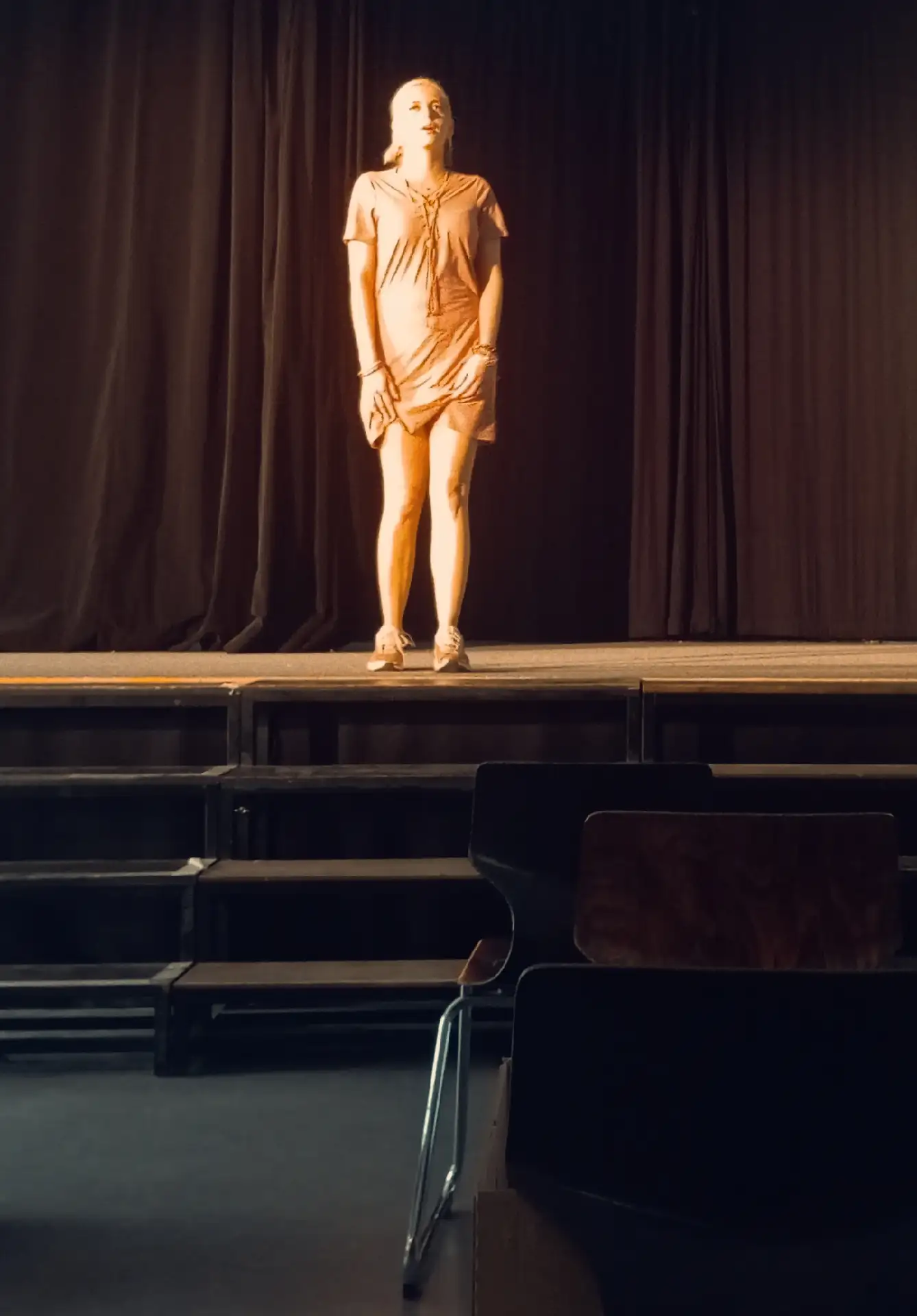
The Physical Theatre Laboratory is rooted in creation and improvisation — both as solo practice and as collective work. The body is the starting point for every form of expression, free from censorship, connecting the inner and outer worlds.
It is a practice of listening inwardly — awakening the cells, the vibrations of emotions, bodily memories, images, and movements that are somehow condensed and transformed into expression. Physical Theatre challenges form through its connection with the grotesque, surrealism, and transdisciplinary layers of experience and reality. Participants become multimedia voices, speaking through their own bodies.
The work in Physical Theatre reconnects with the nature of being human and with transgenerational knowledge that lives within every body, every object, and every place. Singers, performers, movers, dancers, artists, Physical Theatre practitioners, and the curious come together as a growing community that understands the body as a source of expression and embraces Body & Mind not as a duality, but as an interconnected, active whole.
Participant Feedback:
Was für ein wunderschöner Flash mit dir zu arbeiten. Jam in Love! Ich habe so viel gelernt und erfahren und erlebt und durch mich durchfließen lassen und mich getraut durch dich. (Actress, based in Berlin)
MUSIC THEATRE
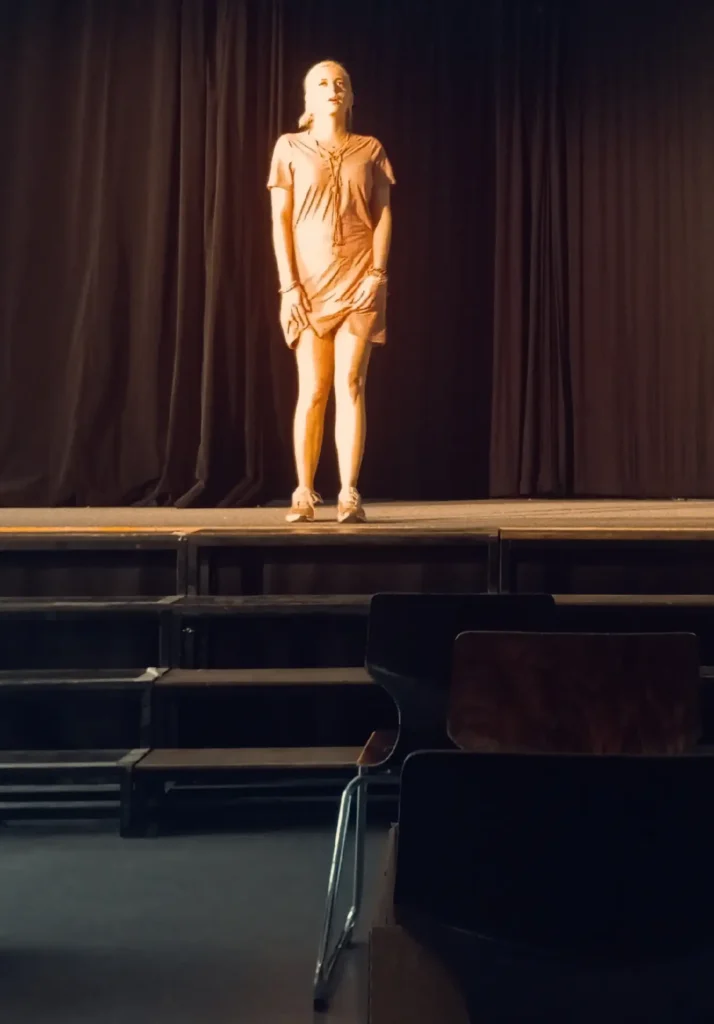
My teaching is based on five equally important areas of focus that support singers in their development towards becoming holistic stage performers.
The work includes learning existing monologues and developing them towards recitatives and arias. It also addresses the demanding ability of being both musician and actors simultaneously on stage. This requires daily training in perception, body awareness, and rhythm, enabling singers to meet the challenges of this complex form of multitasking.
At the same time, my approach to teaching music theatre responds to current developments within opera houses and the independent music theatre scene, where singers increasingly appear as artistic makers rather than solely as interpreters. Within this expanded understanding of the profession, singers develop their own performative signatures, actively participate in creative processes, and contribute to the creation of innovative music theatre formats. They become central artistic agents within a field that is continuously evolving aesthetically, structurally, and performatively.
Five Areas of Focus
1. Monologue Work – Building a Bridge Towards Musical Form
This area focuses on working with classical and contemporary spoken monologues, as well as their transformation and further development into recitatives and arias.
The aim is to organically connect vocal, linguistic, and physical forms of expression. A bridge is created from spoken language, through recitative, towards sung aria.
At the centre of the work is the ability to maintain the inner motivation and energy of the character when music enters the scene. This inner dynamic becomes the driving force that carries the stage figure forward and gives the musical form depth, clarity, and presence.
2. Scene Work – Dramaturgy and Character Development
Students learn how to build a scene and understand its dramaturgical structure. The focus lies on analysing the given situation, the relationships between characters, and the underlying motivations behind their actions.
Scenes are also developed through improvisation and explored through theatrical exercises.
3. Physical Theatre – Body Work for the Stage
Drawing on Physical Theatre methods and tasks developed by Jean Martin Roy (SUPSI), Raúl Vargas Torres (SUPSI) and me, the body is trained as a central instrument of expression.
Focus areas:
- composition of voice and movement in space, both individually and collectively
- synergy between voice, body, and energy
- training of presence, grounding, and body awareness
- improvisation through movement and voice
- imaginative exercises that expand creativity and scenic thinking
- body-strengthening exercises to enhance stage presence
4. “Multitasking Organism” – The Simultaneous Challenge of Being a Precise Musician and an Authentic Actor
Students train the ability to consciously navigate musical and acting demands simultaneously.
The work includes:
- daily training in multitasking and coordination: maintaining awareness of the musical level (score, dynamics, rhythm) while simultaneously embodying the theatrical level (inner objective, energy, and tempo of the character)
- targeted multitasking exercises focusing on:
- rhythm and dynamics of the music
- dynamics, motivation, and perspective of the character
- the awareness that these two layers often follow different tempos, creating vitality and complexity within a scene
- ensemble work: interaction and listening within the “organism” of orchestra and ensemble
5. Performance and Creation
This area focuses on the individual artistic voice of each singer.
Students develop a short piece of approximately seven minutes in which they create their own work combining spoken text and singing.
The aim is to formulate their own artistic perspective and identity, and to develop a confident performative voice as creators.